The Case for Being a Full-Stack Data Scientist
Towards the end of my undergraduate studies, I started thinking seriously about what would come next. Not just in a vague “I’ll get a job somewhere” way, but in the very real sense of trying to picture what my life would actually look like after school. What I knew was that I liked numbers and patterns. I liked the feeling of taking something messy and confusing and slowly turning it into answers. So when I eventually got my first data role, I was excited, but I definitely didn’t have a clear roadmap. I had a maths degree, a lot of curiosity, and a browser full of job roles I only half understood.
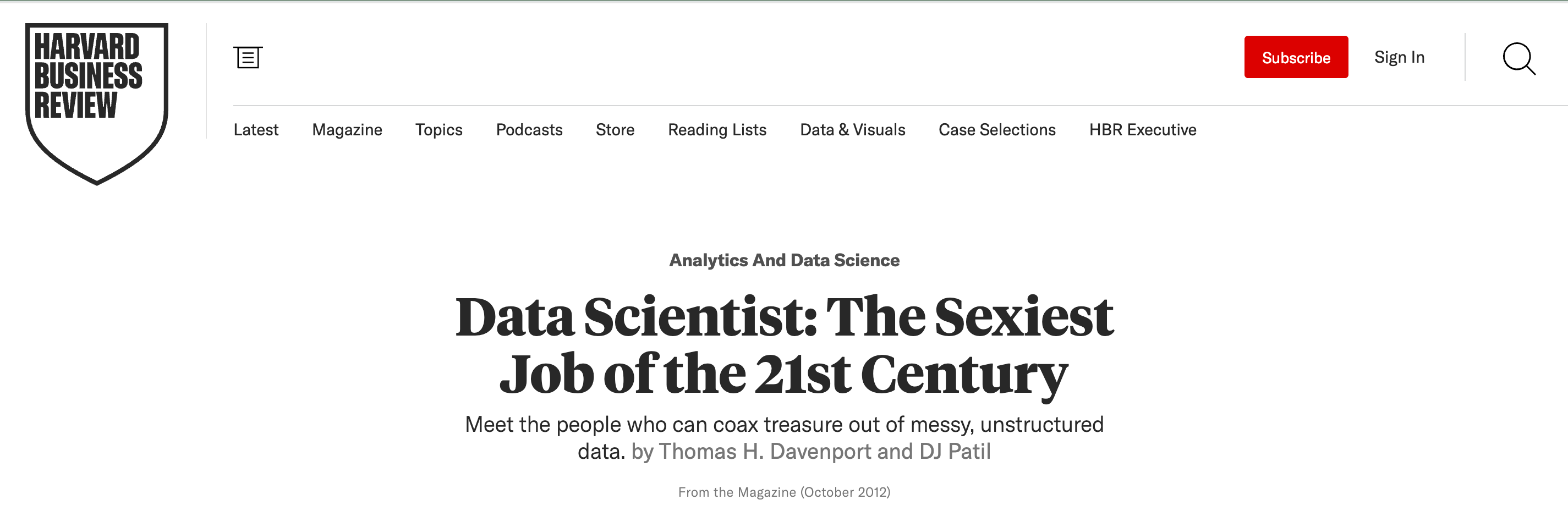
Around that time, one phrase kept following me everywhere: data science had just been called “the sexiest job in the world.” Articles were emphasizing it, companies were suddenly in a rush to hire “data people,” and it felt like the entire industry had discovered this new shiny thing overnight. On the surface, it sounded like exactly where I should be heading.
But the more I read, the more confusing it became. Some companies wanted data analysts who could write SQL and build dashboards, others wanted data scientists who could build machine learning models, then there were data engineers focused on pipelines and platforms. Staring at all those descriptions, I kept coming back to a simple question: which one of these was I actually supposed to become?
What my first data job taught me
My first few years in the industry quickly taught me something that job descriptions don’t always make obvious.
Real data problems don’t arrive neatly labeled as “analyst,” “scientist,” or “engineer” work.
They usually start with a vague business questions.
Questions like:
- Why are customers behaving this way?
- Can we predict which users will churn?
- How do we make sense of this data we’ve been collecting? How do we move this data to point B?
And when you start digging into those questions, you realize the problem is almost never just about analysis.
Sometimes the data isn’t clean, sometimes it isn’t structured and other times it isn’t even easily accessible yet.
I remember one early project where I thought I was coming in to “analyze the data.” In my head, I was expecting a clean table waiting for me. Instead, I spent days trying to figure out where the data was, writing queries to extract it, cleaning inconsistencies, and stitching together tables from different databases; just to get to the point where analysis was possible.
That experience stayed with me.
It made me realize that solving real data problems usually means touching multiple layers of the stack, whether your title says “analyst,” “scientist,” or “engineer,” you are here to solve data problems.
Learning from the job market
One habit that helped me early in my career was studying job postings, not just the ones I wanted to apply for, but a wide range across the data space.
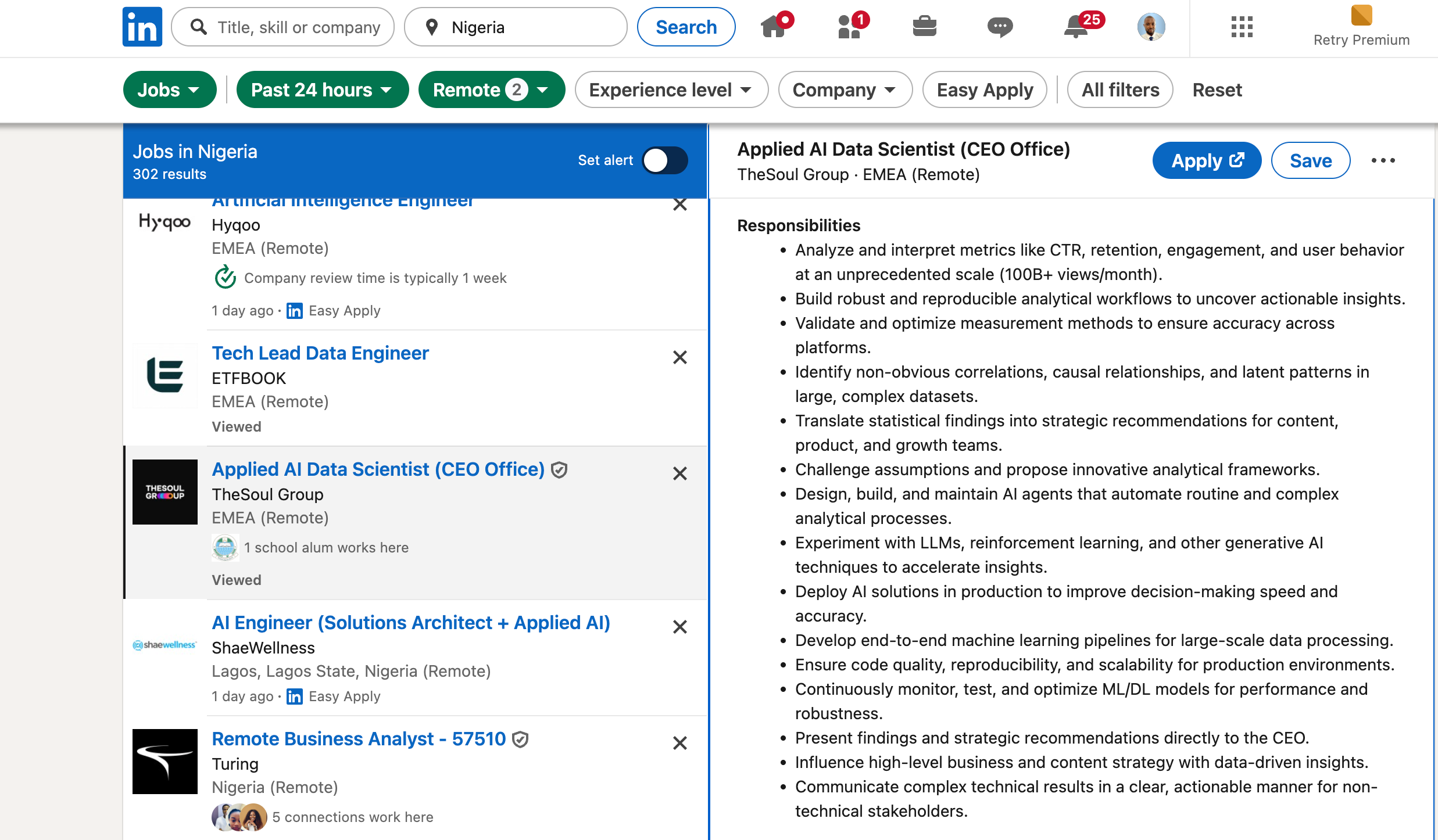
I saw them as a guide to what companies needed and where the industry was heading in terms of skills, roles and responsibilities.
- Data analyst roles kept emphasizing SQL, reporting, and dashboards.
- Data scientist roles focused on Python, statistics, and machine learning.
- Data engineer roles highlighted pipelines, ETL systems, and infrastructure.
Instead of forcing myself to choose one lane immediately, I started picking up pieces from each.
I learned enough data engineering to move and transform data, I learned enough analysis to tell a clear story with it, I learned enough modeling to know when a simple baseline was better than a complicated algorithm.
At the time, I wasn’t trying to become something called a “full-stack data scientist.” I just wanted to be the kind of person who could solve any data problem, and have enough skills to move it forward.
Looking back now, that curiosity across the stack quietly shaped my entire career.
Why I still believe in the full stack
Today, the data ecosystem is even more specialized than when I started.
We now have:
- Analytics Engineers
- Machine Learning Engineers
- Data Platform Engineers
- AI Engineers
And to be clear, specialization has a real and important place. Large organizations need deep experts.
But from what I’ve seen, there is still huge value in understanding the entire lifecycle of data.
From the moment data is created, to where it lives, how it’s cleaned and modeled, and how it eventually shows up in dashboards, products, and decisions.
Once you’ve seen that full picture, it changes how you approach problems. You stop thinking only in terms of “my part of the pipeline” and start thinking in terms of outcomes.
A thought for people starting out
If you’re early in your data career today, it can feel like you have to pick a lane immediately; analyst, scientist, engineer, or something even more specific like “AI engineer.” AI is hot, every job post seems to mention LLMs, and it’s easy to feel like you’re already behind if you’re not all in on one narrow path. My view is that it’s okay to zoom out first. Spend time understanding the broader ecosystem: where data comes from, how it moves, how it’s used, and how AI fits into that picture instead of treating it as the whole picture.
You don’t need to become an expert in every layer. That’s not realistic, and it’s not the goal.
But developing a full-stack understanding even at a basic level will make you a much better problem solver. It will help you see around corners, ask better questions, and build things that actually matter to the people using them.
And ultimately, that’s what drew me to this path and keeps me on it:
Solving real problems with data, end to end.
About the author
I help teams in fintech, Banking & Finance, and energy build and scale data systems that work in production from pipelines and analytics to models that support real decisions. This blog is where I share practical lessons from that work.
- Say hi: Connect on LinkedIn: I'm always open to conversations about data, analytics, and engineering.
- Consulting: I take on selective work helping organizations build and scale data platforms in Africa and similar markets. If you need a partner on architecture, delivery, or analytics, email me or visit the contact page.