Customer Lifetime Value in Practice: How We Used CLV to Rethink Digital Acquisition at Ecobank
One manager who truly deepened my analytical rigor was Osahon Akpata. I remain grateful for the opportunity to work with such an inspiring and disciplined leader.
Sometime in 2023, we launched an acquisition campaign with Jumia. At the time, we had just set up the Digital Sales, Engagement, and Acquisition team at Ecobank, with a clear mandate: sell, acquire, and engage customers digitally. One way we decided to do this was to partner with an Ecommerce giant; Jumia to drive acquisition of these customers.
To provide some context, Jumia operates one of the largest e-commerce ecosystems in Africa, with deep visibility into customer purchasing behavior. Ecobank, on the other hand, has rich financial data across the customer lifecycle of their customers. Bringing both together created a powerful opportunity: combining spending intent with financial depth.
Our focus on this project was on acquiring high-value customers.
Jumia presented a strong opportunity. Our hypothesis was simple: if a customer can spend over ₦250,000 on a single item, there's a high likelihood they are a high-value individual.
So we built a campaign around targeting these types of users.
Then we hit a familiar wall every marketing team is well acquainted; budget.
Jumia proposed a cost per acquisition, but the real question wasn't the price. It was whether the price made sense to us. How much should we actually be willing to spend to acquire one customer?
This is where Customer Lifetime Value (CLV) came in.
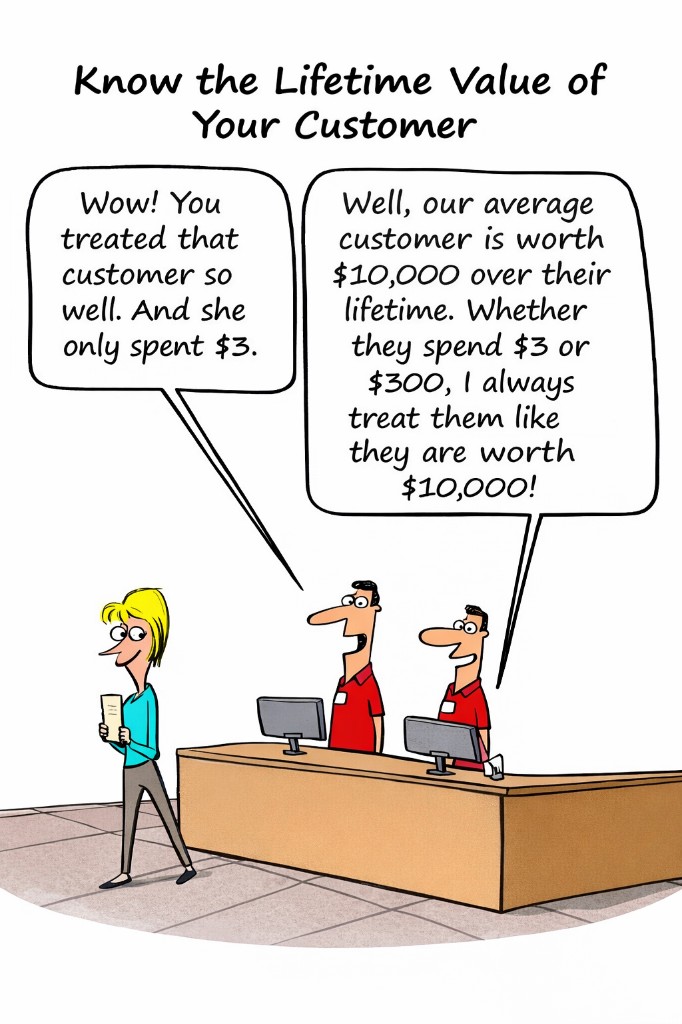
CLV, simply put, is the total value a customer is expected to generate over their entire relationship with your business. Companies like Netflix and Uber have mastered this idea, spending heavily upfront to acquire users because they understand the long-term value those users bring.
We applied the same thinking.
I got to work. I started by identifying a comparable internal segment; our premium customers, which we would call the "wealth segment for this article." I pulled historical data spanning close to 10 years and focused on key monetary behaviors: deposits, withdrawals, bill payments, and overall engagement.
The goal was simple: understand what these customers are truly worth over time.
It definitely wasn’t a straight line. We went back and forth a few times, scrapped some early approaches, and had to rethink parts of the model, but we eventually got to a CLV we could stand behind.
Let's say, for context, the estimated CLV over 10 years was $10 million at an aggregate level. That insight changed everything.
Instead of guessing, we now had a principle: we could spend a small fraction of that value, around 1% to acquire similar customers and still come out ahead.
That gave us a clear, data-backed acquisition threshold.
With that clarity, we moved forward confidently with the campaign. We acquired customers, but more importantly, we acquired the right customers.
And that really taught me something fundamental about using data to drive business value.
Before this, "budget" used to feel like a negotiation, back and forth, opinions, maybe a bit of gut feel. But in this case, it forced a different kind of thinking. We stopped asking "how much should we spend?" and started asking "what is this customer actually worth to us?"
Because once you have a sense of value, the conversation changes. You're no longer just throwing money at acquisition and hoping it works. You're making a call based on expected return. It becomes less of a gamble and more of a calculated move.
I also liked what it did for the team. There was less noise, fewer opinions flying around, and more alignment. Everyone could see the logic. It wasn't perfect, but it was grounded.
It also changed how I think about growth in general.
It's easy to chase numbers, more users, more signups, more volume. But that can get misleading very quickly. What actually matters is who you're bringing in and what they're worth over time. That's the difference between growth that looks good on paper and growth that actually means something.
Data helps with that. Not in a fancy way, just in a practical sense. It gives you something solid to work with, something you can defend. It won't remove all uncertainty, but it reduces the guesswork enough for you to move with confidence.
And in most real-world situations, that's more than enough.
About the author
I help teams in fintech, Banking & Finance, and energy build and scale data systems that work in production from pipelines and analytics to models that support real decisions. This blog is where I share practical lessons from that work.
- Say hi: Connect on LinkedIn: I'm always open to conversations about data, analytics, and engineering.
- Consulting: I take on selective work helping organizations build and scale data platforms in Africa and similar markets. If you need a partner on architecture, delivery, or analytics, email me or visit the contact page.